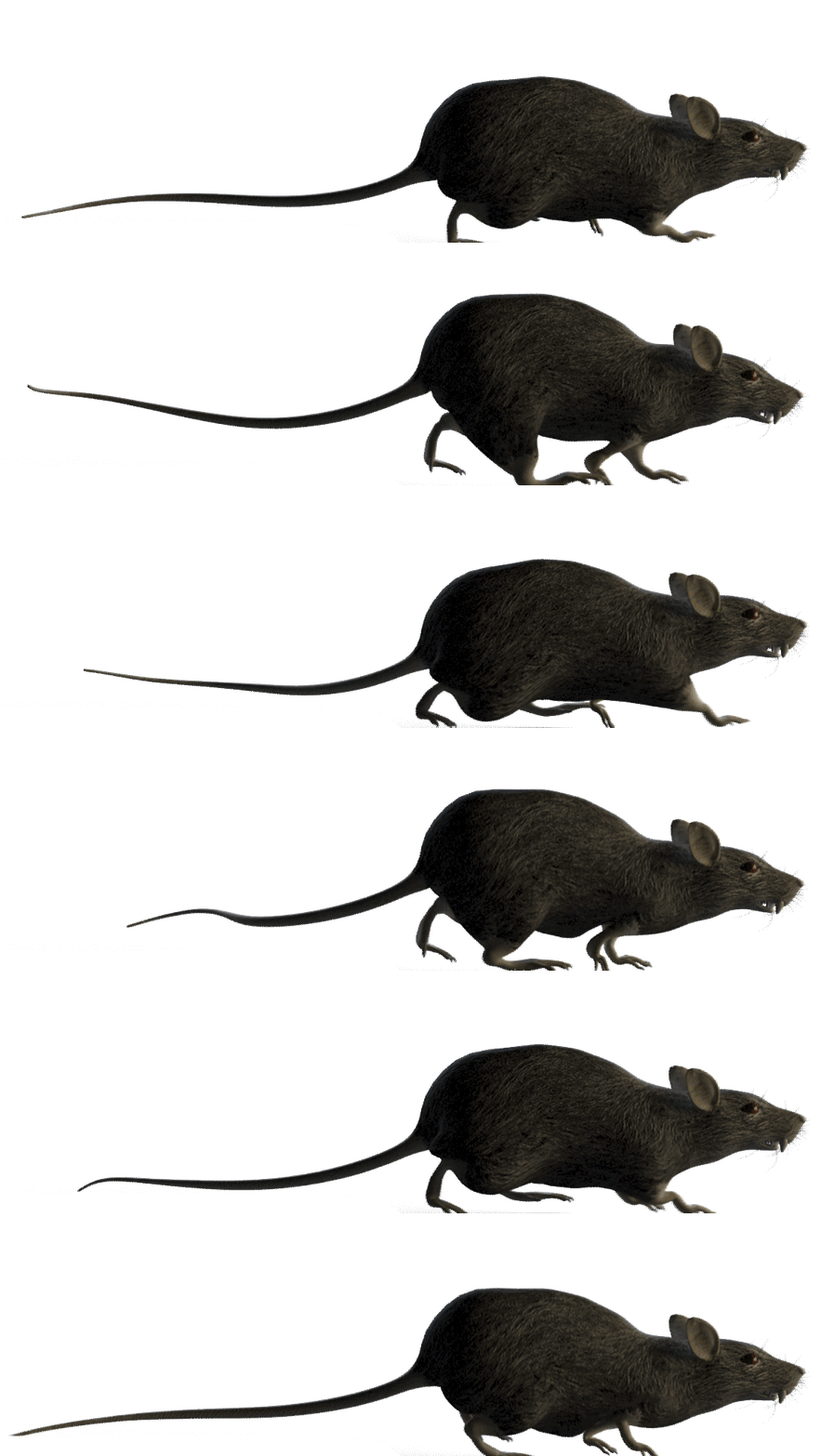

Rat and Mouse Control
If you hear quick scratching in the attic after dark or find small droppings along a wall, you most likely have roof rats or mice. Michael Gerbino of Cypress Critters & Pests finds where they are getting in, traps the ones already inside, and seals every gap a quarter inch and up so the next ones cannot follow. He serves Cypress, Spring, Tomball, The Woodlands, Klein and north Houston. Call Michael at 713-775-8799 and he will come look at the house himself.
What does a rat or mouse problem sound and look like?
Rodents keep a schedule, and the schedule tells you a lot. Roof rats come out after sunset and run the same paths every night. Mice are smaller and quieter, and they show up more in kitchens and garages than over the ceiling. Squirrels make noise too, but in daylight. If the sound starts at dusk, think rats.
| When and where | What you notice | What it usually means |
|---|---|---|
| Night, over the ceiling | Fast scratching or running that stops and starts | Roof rats traveling between the roof edge and a nest in the insulation |
| Night, inside a wall | Light gnawing or rustling near the floor or an outlet | Mice or rats using the wall cavity as a hallway |
| Morning, kitchen or pantry | Small dark droppings, chewed bags or boxes | Mice feeding at night and hiding by day |
| Morning, garage | Droppings near the door seal, torn pet food or bird seed bags | Rodents coming in under a worn door seal |
| Any time, attic | Tunnels in the insulation, greasy dark marks on wood | Rats have used the same route long enough to stain it |
| Evening, back fence | A rat running the top rail toward the house | Fence lines and tree limbs are the road to your roof |
How do roof rats get into Houston-area houses?
Roof rats live up high. Around here they travel the tops of wooden fences, climb into oak and pine limbs that hang over the roof, and drop onto the shingles. From there they look for any opening into the attic. Mice come in low, through the garage and the foundation. Either one only needs a gap about the width of your thumb.
- Soffit returns: the small boxed corner where two rooflines meet often has a gap behind the trim. It is one of the first places Michael checks.
- Roof-to-fascia gaps: where the shingles meet the board along the roof edge, a sliver of open space is enough for a rat.
- Gable vents: thin screens behind the louvers tear or rust, and rats chew around the frame.
- A/C line chases: the hole where the copper lines and wiring enter the wall is often stuffed with foam or nothing at all.
- Plumbing vents and roof penetrations: loose flashing around pipes leaves a ring of open space.
- Garage door corners and weather seals: worn rubber at the bottom corners is a common mouse door.
- Crawl-space vents and pier-and-beam skirting: on raised houses, broken vent screens and gaps in the skirting let rodents under the floor and up the walls.
Why do bait boxes and traps alone not fix it?
Poison bait kills some rats, but it does nothing about the hole they used. New rats find the same opening by smell within weeks. Bait also means a rat can die inside a wall or under the insulation, and then you are dealing with the odor instead of the noise. Snap traps inside the attic have the same limit: they catch the rats that are there today. The fix is to close the house, and that is exactly what Michael’s animal exclusion and live trapping service is built around: find every entry point, remove what is inside, and seal it with material rodents cannot chew through.
Hearing something tonight? Call 713-775-8799 and tell Michael what you are hearing and when.
How Michael handles it
Michael does the inspection and the work himself. Here is the order he follows on a rodent job.
- Inspect outside and in. He walks the roofline, the soffits, the vents, the A/C chase, the garage and the foundation, then goes into the attic to read the droppings, tunnels and rub marks. That tells him how many routes the rodents use and which ones are active.
- Trap the rodents already inside. Traps go on the runways he found, in places pets and children cannot reach, and they are checked on a schedule.
- Seal the entry points. Every opening a quarter inch or larger gets closed with hardware cloth, galvanized mesh, metal flashing or rodent-resistant sealant. Foam alone is not used, because rats chew right through it.
- Repair and clean. Chewed vent screens and trim get fixed, and soiled insulation and droppings are cleaned up so the attic is not still advertising a place to live.
- Follow-up check. Michael checks the traps after sealing to confirm activity has stopped before he closes out the job.
Rats draw other animals too. Snakes follow rodents into garages and flower beds, so a rodent job sometimes turns into snake removal. If the noise in your attic is in daylight, it may be squirrels instead, and heavy thumping at night points to raccoons. A smell that will not go away can mean something already died in a wall, which is a job for dead animal removal. Restaurants, warehouses and other businesses get the same approach through commercial wildlife and pest control. For roaches, ants and spiders, see pest control. You can see everything Michael handles on the wild animal control services page.
Where Michael does this work
Michael handles rats and mice across the northwest side of the Houston area. Each town has its own page with what he sees there:
- Rat and mouse control in Cypress
- Rat and mouse control in Spring
- Rat and mouse control in Tomball
- Rat and mouse control in The Woodlands
- Rat and mouse control in Klein
- Rat and mouse control in Houston
What goes into the quote?
Michael quotes a rodent job after he has seen the house, because no two houses have the same openings. What moves the number is how many entry points there are, how high they sit on the roof, whether the house is slab or pier-and-beam, how long the rodents have been there, and how much insulation and trim needs repair or clean-up. He will tell you plainly what your house needs and why.
Ready to get the house sealed? Call Michael at 713-775-8799, or send a note through the contact page.
More answers from Michael
- What is making noise in my attic at night?
- Scratching in the walls: day or night, which animal?
- Roof rats or mice: how to tell
Questions people ask about rat and mouse control
How do I know if it is rats or mice in my attic?
Rat droppings are about the size of a raisin with blunt ends, and mouse droppings are closer to a grain of rice with pointed ends. Rats also leave dark greasy marks on beams and make heavier running sounds. In this area the attic animal is usually a roof rat, while mice are more common in kitchens, pantries and garages. Michael confirms it during the inspection.
Why do I hear rats only at night?
Roof rats are night animals. They rest in the nest during the day and come out after sunset to travel to food and water, often along the same path every night. That is why the noise starts around dusk and fades before morning. If you hear running and scratching in daylight hours, the animal is more likely a squirrel, which is a different job with different entry points.
How small a hole can a rat or mouse squeeze through?
A mouse can get through a gap about a quarter inch wide, and a young roof rat needs only a little more. If the head fits, the body follows. That is why Michael seals every opening a quarter inch and larger, not just the obvious chewed holes, and why he uses metal and hardware cloth instead of foam that rodents chew straight through.
Can I just put out poison bait myself?
You can, but bait does not close the opening, so new rodents keep arriving. A poisoned rat often dies where you cannot reach it, inside a wall or under insulation, and the smell can last for weeks. Bait can also reach pets and wildlife that eat a poisoned rodent. Sealing the house and trapping what is inside fixes the cause instead of the symptom.
Will cutting back my trees help keep roof rats off?
It helps. Limbs touching or hanging over the roof are a bridge for roof rats, so trimming them back several feet from the roofline takes away an easy route. It does not replace sealing, because rats also climb downspouts, fences and brick. Michael will point out which limbs and fence lines are being used when he walks the outside of the house.
Do rats chew electrical wires in the attic?
Yes. Rodent teeth never stop growing, so rats and mice gnaw constantly, and wire insulation is soft enough to chew. During the attic inspection Michael looks for chewed wiring and points out anything he finds so you can have an electrician look at it. Getting the rodents out and the house sealed is what stops new damage from happening.
What should I do with the droppings before you get here?
Leave them alone if you can. Do not sweep or vacuum dry droppings, because that stirs up dust. Keep food sealed in hard containers, pick up pet food at night and keep children and pets out of the area. Michael cleans up droppings and soiled insulation in the attic as part of the job once the rodents are out.
Contact Us Anytime
Michael handles raccoons, opossums, squirrels, rats and snakes day or night. He inspects the whole house to find every way in, catches the animals alive, and seals the openings so they cannot come back. He also repairs the damage they leave behind.
Call or Text Michael
(713) 775-8799
Cypress Critters & Pests
Cypress Critters & Pests is owner-operated by Michael Gerbino: humane wildlife exclusion, live trapping and pest control around Cypress, Spring, Tomball, The Woodlands, Klein and Houston.