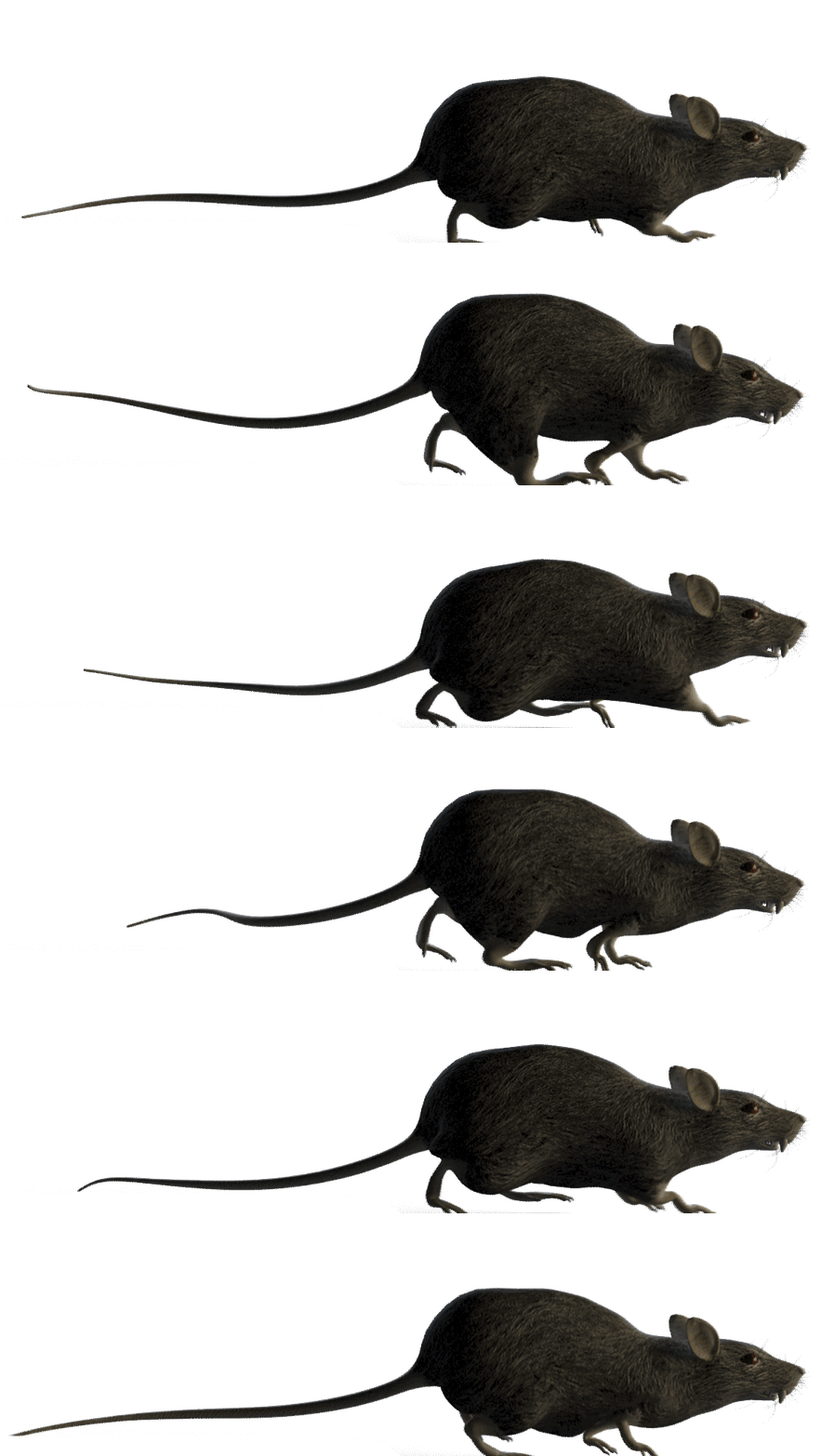
The time of day is your strongest clue. Scratching inside the walls in the morning and late afternoon is usually squirrels, because they sleep at night. Scratching that starts after dark and runs until dawn is almost always roof rats or mice. A raccoon is too big to travel inside most wall cavities, so a heavy sound near the top of a wall usually means one is in the attic or the soffit above. Michael Gerbino of Cypress Critters & Pests can find which one it is and where it gets in. Call 713-775-8799.
What does scratching during the day usually mean?
Squirrels keep a daytime schedule. They leave the house in the morning to feed, come back during the day, and settle in before dark. In a wall you hear quick scratching, running up and down, and sometimes a rolling sound as they move nesting material or food. The noise is loudest near the roofline, where they came in, and in the upper part of an outside wall.
Squirrels get in by chewing. Look along the roof edge for a round hole with clean, chewed edges at the fascia, the soffit or the corner of a gable vent. That is often the whole story: one hole, one family of squirrels, and a wall they use as a hallway.
Why does scratching at night usually mean rats or mice?
Roof rats and mice are night animals. They come out once the house is quiet, travel the same paths over and over, and use the gaps between studs to move from the attic down to the kitchen or the garage. The sound is light and fast, with stops and starts, and you may hear gnawing. Because they are small, they can be in more than one wall at the same time.
Rats and mice get in through gaps you might not notice: around plumbing and air conditioning lines, at the corners of a garage door with a worn seal, under siding, and at the roof returns where two rooflines meet. Inside, they leave droppings along the walls, in cabinets and in the attic.
| When you hear it | What it sounds like | Most likely animal | Where to look outside |
|---|---|---|---|
| Morning and late afternoon | Quick scratching, running, rolling | Squirrels | Round chewed holes at fascia, soffits, gable vents |
| After dark until dawn | Light scurrying, gnawing, stops and starts | Roof rats or mice | Gaps at pipes, A/C lines, garage door corners, roof returns |
| Night, heavy, near the ceiling line | Thumps and slow walking above the wall | Raccoon in the attic or soffit | Torn soffit panels, pulled-off vent screens |
| Dusk, near one high spot | Rustling and squeaking | Bats | Narrow gaps at the roofline with dark stains |
| Scratching that stops for good | Then a smell a few days later | An animal that died inside the wall | Follow the smell to the nearest outside opening |
Could the animal be stuck or dead inside the wall?
Sometimes. A young squirrel or a rat can fall down a wall cavity and not be able to climb back out. That sounds like steady scratching in one low spot that goes on longer than usual. If the scratching stops and a bad smell shows up a few days later, the animal has likely died inside the wall. Either way, the spot where it went in is still open, and that is what has to be found.
Why can I not just patch the hole I found?
Patching one hole can trap an animal inside, and an animal shut in a wall will either chew a new way out or die there. It also leaves every other opening on the house untouched. Most houses with an animal in the walls have more than one way in. Trapping one animal alone does not fix it either, because the next one follows the same scent to the same gap. The real fix is animal exclusion: get every animal out alive, then seal every opening with metal they cannot chew through.
Call 713-775-8799 before you patch anything, so nothing gets sealed in.
How does Michael find what is in the wall?
He starts outside. He walks the house and the roofline looking for chewed edges, rub marks, droppings and torn screens, then goes into the attic to see where the paths lead down into the walls. Once he knows the animal and the entry points, he sets live cage traps or a one-way door, a flap that lets the animal leave and keeps it out. Animals are removed alive and handled following Texas rules. Then the openings are sealed and the damage is repaired.
When should I call?
Call when the scratching repeats on more than one day or night. If it happens at night, read about rat and mouse control. If it happens in daylight, see squirrel removal. If the sound is heavy and overhead, the raccoon removal page explains how a raccoon gets handled.
Scratching in the walls right now? Call or text Michael at 713-775-8799 and tell him when you hear it.
Questions people ask about scratching in the walls
Can a squirrel get stuck inside the wall of a house?
Yes, young squirrels especially. They can slip down a wall cavity from the attic and not have enough grip to climb back up. You hear steady scratching from one low spot, often for a day or two. Michael finds where it is, gets it out alive, and then seals the opening it came in through so the rest of the family cannot follow.
Why do I only hear the scratching in one wall?
Animals use the same path every time. One wall is usually the hallway between the way in at the roofline and the place they nest or feed. That makes the wall a clue: the entry point is often straight above it or on the outside face of that wall. The inspection starts there and then covers the rest of the house.
Should I cut a hole in the drywall to get it out?
Usually not. The animal is rarely right where the sound seems to be, and a scared animal can come out of the hole and into the room. Most animals in walls can be caught from the attic or the entry point outside. Cutting drywall is saved for an animal that is truly stuck or has died in one spot.