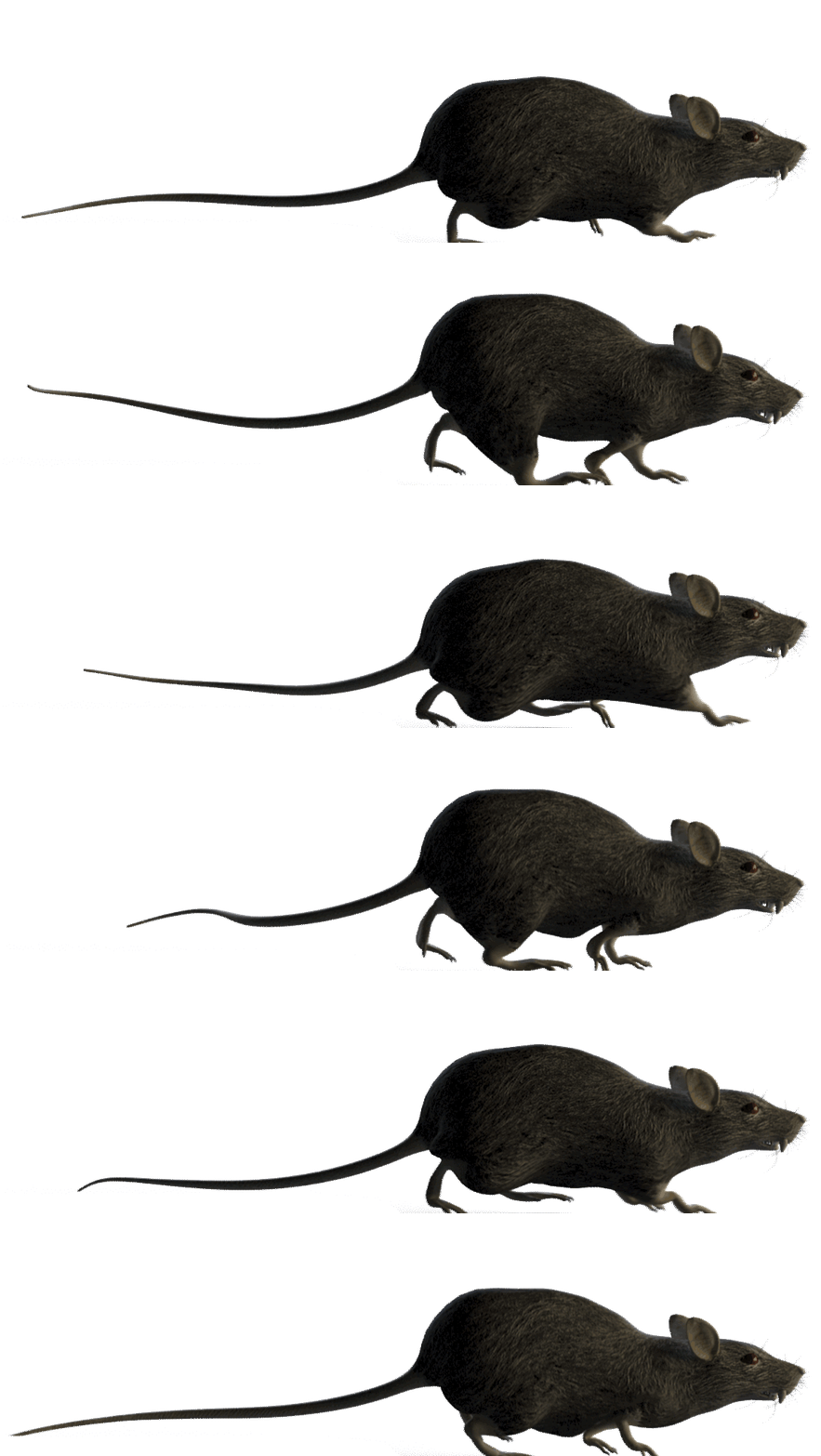

Rat and Mouse Control in The Woodlands, Texas
Roof rats in The Woodlands travel the canopy. They run fence rails and pine and oak limbs at night, drop onto the roof and slip into the attic through a gap at the eaves no wider than your thumb. Michael Gerbino of Cypress Critters & Pests traps the rats already inside, seals every opening down to a quarter inch, and cleans up after them. Mice coming into garages get the same treatment at ground level. Call Michael at 713-775-8799.
What do roof rats do in Woodlands houses?
A roof rat is a climber, and few places give it as many roads as a wooded neighborhood. It can nest in the greenbelt, feed in your backyard and sleep in your attic, moving between them along branches without touching the ground. Once inside, it tunnels through insulation, gnaws on wiring and duct wrap, and runs the same path night after night until the wood is stained dark. You hear it after the house goes quiet, then it fades before morning.
Mice tend to come in lower. Garages full of bird seed, dog food and stored boxes are the usual first stop, and from there they work into the walls. Both draw other trouble: rodents are the main reason snakes come close to a house, which is why rat jobs and snake removal in The Woodlands so often go together.
Where Michael most often finds rat routes on Woodlands houses:
- Limbs resting on the shingles, especially over a back corner of the house
- The top rail of a wood fence where it meets the corner of the house
- The opening where the A/C lines enter the wall
- Gaps at the roof-to-fascia joint and in soffit returns
- Loose flashing around plumbing vents on the roof
- Worn weather seal at the bottom corners of the garage door
Why do bait and traps alone keep failing?
Bait and traps deal with the rats in the attic today. They do nothing about the gap they came through, and in a neighborhood this wooded there is a steady supply of new rats to find it. A poisoned rat also tends to die in a wall where nobody can reach it. The lasting fix is to close the house: find every entry, take out what is inside, and seal it with metal. That is the heart of Michael’s animal exclusion and live trapping service, and the animal exclusion in The Woodlands page shows how he keeps that work neat on a covenant-controlled house.
How Michael handles rats in The Woodlands
- Inspect. Roofline, trees, fence lines, A/C chase, garage and attic. The droppings and rub marks tell him which routes are active.
- Trap on the runways. Traps go where the rats travel, out of reach of pets and children, and get checked on a schedule.
- Seal. Every gap a quarter inch and larger is closed with hardware cloth, metal flashing or rodent-resistant sealant. Foam alone is never the answer, because rats chew right through it.
- Clean and repair. Soiled insulation, droppings and chewed vent screens are dealt with.
- Confirm. He checks again after sealing to make sure the activity has stopped.
More on rodents across the area is on the main rat and mouse control page. Hearing scratching tonight? Call 713-775-8799.
Nearby
For the towns next door, see rat and mouse control in Spring and rat and mouse control in Tomball. If the noise in your Woodlands attic comes in daylight instead, it is more likely squirrels. All of his work in town is on The Woodlands page. To book an inspection, use the contact page or call 713-775-8799.
Questions people ask about rats and mice in The Woodlands
Do the woods behind my Woodlands house bring roof rats in?
They make it easier. A greenbelt gives roof rats shelter and food, and the trees that reach your roof give them a way across. That does not mean every house near the woods has rats. It means any opening at the roof edge gets found sooner. Sealing those openings is what keeps a house next to the woods rat-free.
What is that scratching over my Woodlands bedroom after midnight?
Quick, light scratching that starts after dark and stops before dawn is most often a roof rat. Squirrels make their noise in daylight, and a raccoon sounds heavy, like someone walking. Michael confirms it by looking at the droppings, the runways in the insulation and the gap the animal is using to get in.
How are mice getting into my garage?
Usually under the door. The rubber seal at the bottom corners wears down and curls, and a mouse needs only a gap about a quarter inch wide. Gaps around pipes, the water heater vent and the door frame are the next places to check. Store bird seed and pet food in hard containers while the gaps get sealed.
Once the house is sealed, do the rats stay out?
They cannot use the openings that were closed, and Michael checks that activity has stopped before he finishes. A house does change over time, though. A storm can pull a vent loose or new limb growth can open a fresh route, so if you hear scratching again later, call and have the new spot looked at.
How small a gap can a rat use to get into a Woodlands house?
About the width of a quarter for a rat, and less for a mouse. Michael checks roof returns, vent covers, the A/C line chase, plumbing openings and garage door corners, and closes every gap a quarter inch and up with metal or hardware cloth, since rats chew through foam and caulk.
Does Michael use poison bait for rats in The Woodlands?
He traps the rats inside the house and seals the openings instead. A rat that eats poison can die inside a wall or ceiling where nobody can reach it, and the smell can last for weeks. Trapping also shows him when the catches stop, which tells him the house is clear.
Contact Us Anytime
Michael handles raccoons, opossums, squirrels, rats and snakes day or night. He inspects the whole house to find every way in, catches the animals alive, and seals the openings so they cannot come back. He also repairs the damage they leave behind.
Call or Text Michael
(713) 775-8799
Cypress Critters & Pests
Cypress Critters & Pests is owner-operated by Michael Gerbino: humane wildlife exclusion, live trapping and pest control around Cypress, Spring, Tomball, The Woodlands, Klein and Houston.